
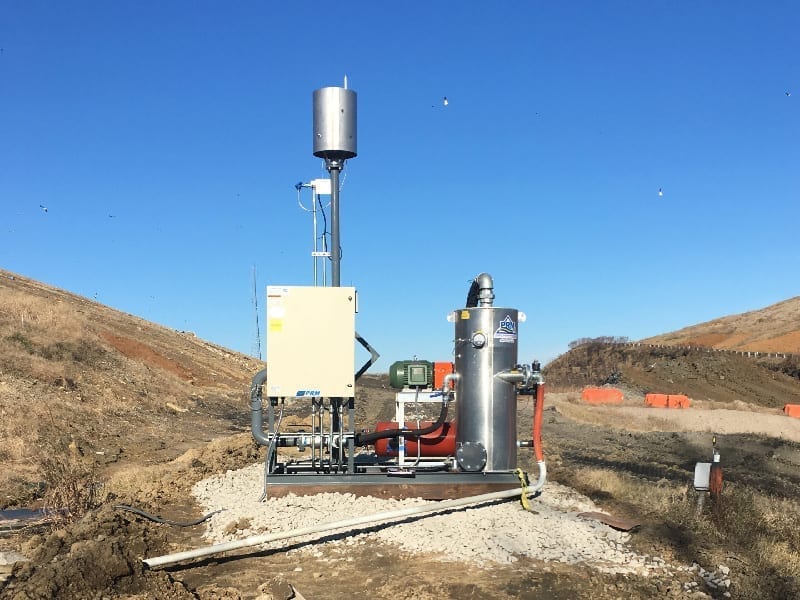
Flare systems control methane and CO2 byproducts from landfill biodegradation through combustion, achieving up to 98% destruction efficiency for compliance and carbon credits.
PRM Flare Systems are used for controlling methane (CH4) and carbon dioxide (CO2), as byproducts of landfill biodegradation. PRM specializes in designing and manufacturing flares for landfill applications up to 10,000 SCFM with destruction rates of up to 98% efficiency. Other markets include wastewater and agricultural applications. PRM has been manufacturing flares for 20 years and has many utility and enclosed flare systems operating throughout the USA and Canada.
Utility Flares, also called "Candlestick Flares," represent a basic design used primarily for combustion of excess landfill or biogas from solid waste landfills. These systems burn concentrated fumes typically containing 40%-55% methane by discharging gases through a pipe and windshield. As gases discharge, they contact a pilot that initially ignites them. Sustained combustion typically occurs without pilot assistance, though the pilot activates as needed. Candlestick Flares are monitored by thermocouple or UV scanner and achieve efficiencies exceeding 98% when properly operated.
PRM Enclosed Flares combust gases inside a vertical, insulation-lined chamber. This design increases destruction efficiencies and permits sampling to confirm destruction, important for compliance assurance and carbon credit optimization. Enclosed flares are typically selected for regulatory compliance or aesthetic considerations, with capacities from 250 CFM to 10,000 CFM. For strict NOx compliance applications, PRM designs enclosed flares with staged burners and injection systems.
PRM offers flare skid systems available for short- or long-term rental, consisting of a blower skid, blower, knockout tank, and controls. Renting allows pilot testing to establish landfill flow capacity, informing permanent flare design specifications.